Meno Peptides: the unwritten menopause chapter
A menopause question brought me into these papers. The words describing who took part turned out to be the most revealing.
Premenopausal women
The large bremelanotide trials that improved desire and reduced desire-related distress enrolled premenopausal women with hypoactive sexual desire disorder, or HSDD. A menopause question deserves a menopause answer; that prefix sets a boundary on the claims I can draw from their result.
Meno Peptides starts at that unfinished edge. Kisspeptin and bremelanotide have led me to very particular places in the published experiments: a questionnaire about desire, a blood marker of bone formation, a meal whose size stayed the same. I prefer those particularities to the roomy suggestion of a peptide for a life stage.
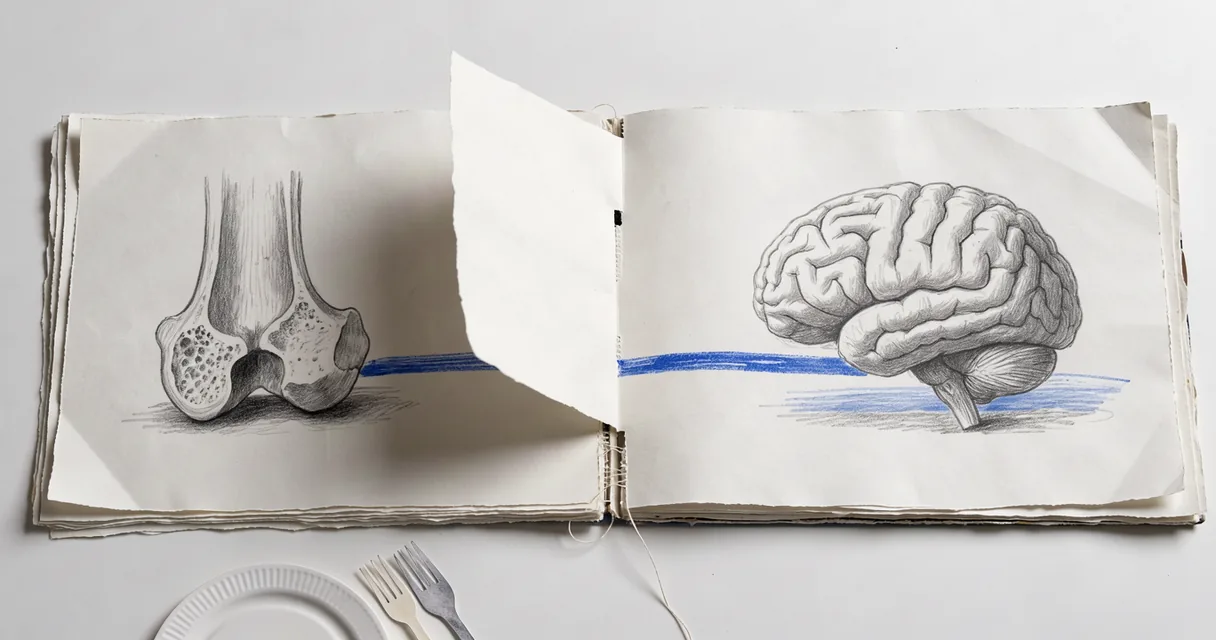
Desire, bone and appetite
Sexual desire begins with bremelanotide, and the difference between a change in a desire score and an enjoyable experience. The trials provide something substantial to discuss; their population also gives that discussion a boundary.
Bone turnover follows an acute kisspeptin experiment in healthy men. Its measurements are intriguing enough to deserve a close look, even though I arrived hoping to learn about a different population.
Appetite reaches the dining table. In women with overweight or obesity, kisspeptin left hunger and measured food intake unchanged despite a hormonal response. That quiet result earns a prominent place here.
The reproductive signal
Kisspeptin has a stranger history than a menopause label would suggest. KISS1 first emerged from melanoma research; human genetics later established its receptor as essential to reproductive maturation. Then experiments found that a strong initial hormone response could fade with repeated exposure.
The discovery and response chapter follows those turns. I think the fading response is especially valuable: it gives the appealing idea of a reproductive switch some actual biological texture.
Menopause research
A review of sexual-dysfunction pharmacotherapy separates premenopausal and postmenopausal care. That distinction seems a sensible place to begin a site with this name.
My ambition for the subject is quite ordinary: studies that enrol postmenopausal women and measure the outcomes being discussed. Until then, there is plenty to examine in the results already on the page, without filling the empty margin with certainty. The reading list collects the studies and reviews discussed here.